
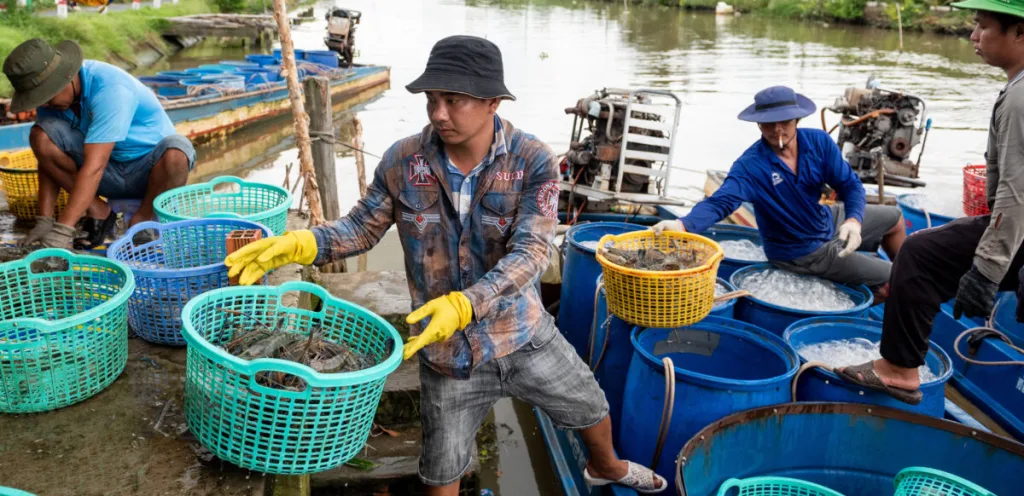
Louisiana shrimpers are struggling to stay afloat due to rising operational costs and lowered shrimp prices caused by an influx of foreign imports.
They are also struggling to make enough money to justify running their boats due to an increase in imported shrimp from countries like India, Ecuador, and Indonesia, which is driving down shrimp prices and pushing local fishermen out of the industry.
The shrimp industry in the United States has been dominated by foreign imports for years. Foreign countries import both farmed and wild-caught shrimp at prices that can’t be achieved domestically. These imports are sold at a lower price than possible domestically due to cheaper labor and questionable harvesting practices.
This makes life difficult for Louisiana shrimpers, despite shrimp being such a prominent part of the Louisiana seafood industry, a top tourist attraction.
Louisiana shrimpers catch between 20 and 30 million pounds of shrimp annually, making them the leading shrimp producers in the United States. However, foreign countries import roughly 1.3 billion pounds of shrimp a year into the US, making up 90% of all shrimp consumed by Americans. These imported shrimp are sold at prices ranging from 4 to 8 dollars per pound, which is very cheap compared to Louisiana shrimp, which are typically sold for 8 to 12 dollars a pound.
Essentially, Louisiana shrimp can’t drop down and match the price of foreign shrimp due to labor and equipment costs, and many are wondering whether this spells doom for local shrimpers.
The annual cost of running a shrimp boat can range from $50,000 to $200,000. That is a large amount of money that needs to be accounted for through shrimp sales. In foreign countries, it is much cheaper to harvest shrimp. The vast majority of shrimp from overseas are harvested on farms where shrimp are collected by the ton with very little effort.
The men and women who work in these farms are paid as little as $2-5 dollars a day, a price that cannot be achieved in the US. Even after the shrimp leave the farm, farm labor prices remain minuscule. Farmed shrimp do not need to be sold to docks like harvested shrimp do; they are brought directly to nearby processing plants to lower transportation costs. They do not follow health practices and pay their workers next to nothing.
The combination of these factors allows sellers to sell these shrimp at a much lower price than can be accomplished domestically, undercutting local fishermen, forcing them to lower their prices, and tanking profits.
To understand why these imports significantly affect local fishermen, people need to have a basic understanding of the industry, such as what fishermen’s costs are and how much they’re getting paid for their efforts.
In the past, fishermen used to be able to run their boats exclusively at night, but times have changed. Due to decreased shrimp prices, it’s much harder to bring in a profitable haul in such short hours. Currently, fishermen have to work long hours both day and night to even give themselves a chance at a profit, making shrimping a much more time-consuming process, leading to sleep deprivation and extended time away from family.
Another significant change from the past is the cost of running a boat. Boats run on diesel, but since 1985, diesel prices have gone from .88 cents a gallon to more than $3. Even the nets shrimpers used to catch the shrimp have doubled in price since 1985, with the cost for a set of them going from $876 to $2,000. Shrimpers also need ice to preserve them; since 1985, a block of ice has gone from $14 to $26.
In addition, the rising cost of ice has had a surprisingly significant impact on the amount of money a shrimper must spend to make a run; it has become so expensive that seasoned fishermen, such as Mr. Wes Matherne, a 20+ year shrimping veteran, have stated that to get a start in the industry nowadays, “you will need your own ice machine.”
These rising costs affect shrimpers, but the lowered prices are applying pressure on shrimpers. After being on the water for upwards of weeks at a time, depending on the size of their vessel, fishermen then have to sell their haul.
There are multiple ways to do this, with most fishermen opting to sell their shrimp to the docks, but times are changing. Foreign countries can bring fully processed shrimp into the country for meager prices. To counteract this, dock owners need to sell the shrimp to processors for a lower price, and to be able to afford to sell the shrimp so cheap, they need to buy it at a more affordable cost.
Because of this, fishermen have been pivoting away from selling shrimp to the dock and have begun to favor selling shrimp directly to customers. “You take your shrimp to your dock, make lots of phone calls to spread the word, put up signs, and charge almost three times what the dock will give you,” Matherne claimed.
This increased work adds to an already demanding schedule, making shrimping more time-consuming while it remains less profitable.
Shrimping today requires more work, money, and willpower, but all of this could die in the hands of foreign imports.
The local shrimping industry is dying and may not be passed on to the new generation. New fishermen struggle to get into the industry and make a living. For these reasons, the Louisiana shrimper may become extinct in the next decade or two.
While shrimpers are doing their best, many in the industry believe that the industry does not have a chance in its current state. “The cards are stacked against us,” Matherne stated.
Saint Paul’s students can help curb the demise of the local shrimping industry by eating local gulf shrimp as opposed to foreign-imported shrimp, which is less healthy and hurts the local shrimp scene.
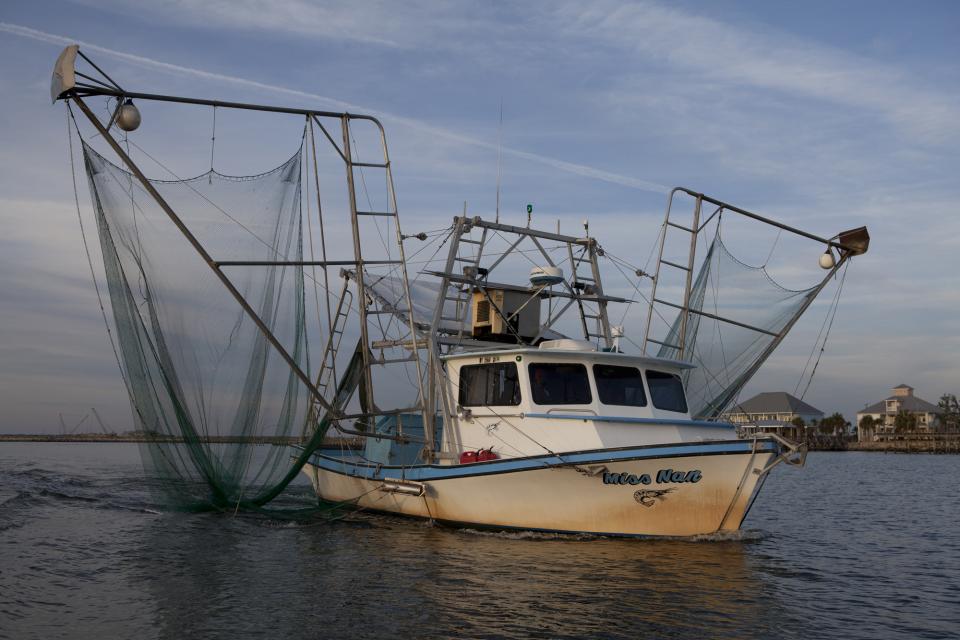
The Louisiana shrimp boat Miss Nan (Louisiana Department of Fish and Wildlife)
Featured Image Photo Credit: Thanh Huế
Published By: CarterPlaisance2025
Back to Wolf Pack Press