

High schoolers are facing the worst mental health crises in history.
For generations, society has trained teenagers to either bottle up their emotions or channel them into unhealthy, self-destructive habits. These philosophies are now manifesting substantially harmful effects.
The crisis stems from previous generations’ stigma around the very thought of mental health. They were taught to simply “suck it up,” “be a man,” and “just keep going.” This was passed on to today’s generation, but there is a disconnect among them; modern generations are more compassionate and more open to different ideas and views.
What the older generations fail to understand is that “being a man” does not mean ignoring one’s emotions and being a cold, aggressive brute. It means learning to live with one’s emotions and finding a balance between being kind yet strong and gentle yet firm. Real men are not simply physically strong; they are mentally, emotionally, and spiritually strong as well.
Saint Paul’s senior Jacob Strecker, someone who battled with anxiety and depression himself, argues against the older generational philosophy against mental health: “I think that the older generation’s belief that our community is soft is far from right. I believe that our world has evolved, and the new technology that we use allows for many different types of mental illness to occur.”
In response, some may call today’s generation soft; however, the benefits of “sucking it up” are completely outweighed by the detrimental effects it can leave on people. A study conducted by the Harvard School of Public Health and the University of Rochester provided evidence that people who bottled up their emotions had a 30% higher chance of premature death, with a 70% higher chance of cancer diagnosis.
The newer generations have more issues mentally to deal with that the previous ones did not. Previous generations found it easy to trudge on because they simply did not have the time to worry about anything other than world war, economic depression, or simply getting by.
With these issues subsided, the youth of today have been left with the time to consider their mental health. This has caused teens to understand the need for mental health, but their parents simply have not gotten it.
This disconnect between teens and their parents leaves teens frustrated, depressed, and lost.
For instance, the rates of teen depression increased from around 8% to almost 16% in 2019, a significantly larger increase compared to an examination of the rates from 2005 to 2014, according to Sylia Wilson, Ph.D., and Nathalie Dumornay, BS, in the United States National Library of Medicine.
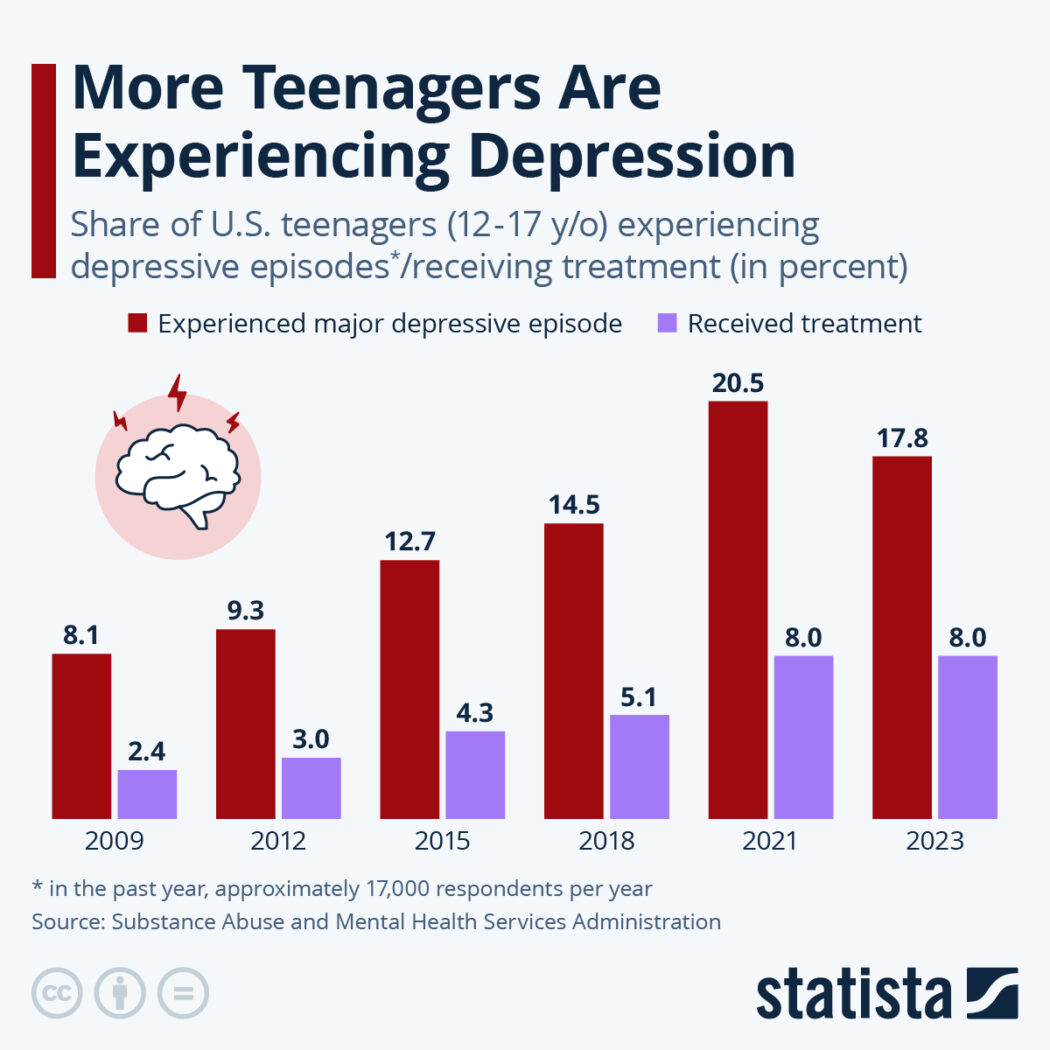
The rate of teen depression is increasing, according to Statista.com.
The rising rates of depression and anxiety leave teens not knowing how to open up, or not wanting to seek help at all, feeling as if they have to bear their problems on their own.
However, when few actually decide to open up, the results may not be favorable. For example, teens who seek help are often ridiculed, insulted, or left feeling unheard; this, in turn, compounds the need to keep feelings inside.
Holding in one’s feelings grows increasingly tiring, exhausting the core until no strength is left. When someone gets to that point of exhaustion, he either lets someone in to help him pick up the broken pieces or lets himself waste away.
Unfortunately, more high schoolers than ever are choosing the latter.
Suicide is the second leading cause of death for the ages of 15-24, with more than 9% of high schoolers reporting at least one attempted suicide. Between 2000-21, the suicide rates for this age group more than doubled, according to the Centers for Disease Control and Prevention (CDC).
One in 10 high schoolers attempted suicide in 2021. More than one in five (22%) students seriously contemplated the same. These CDC statistics should shock the system.
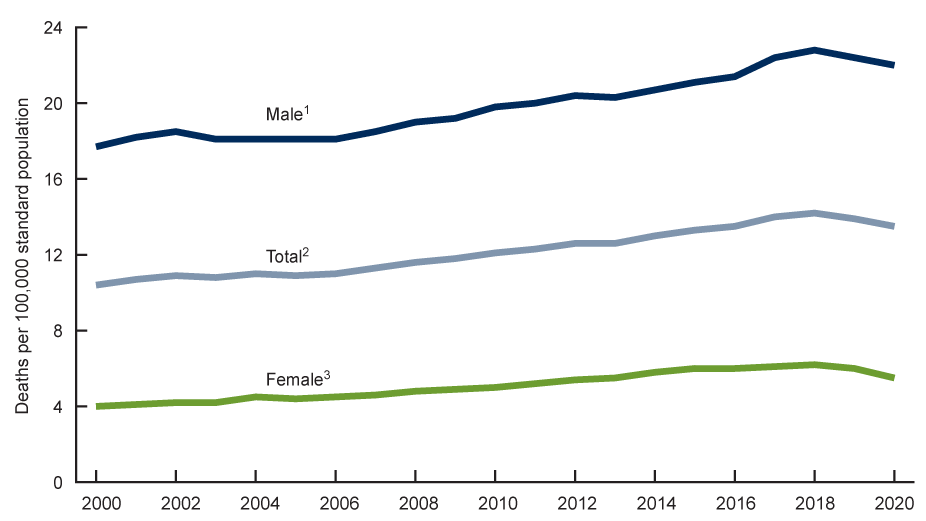
Suicide deaths are increasing, defined per 100,000 population by gender, per the CDC.
These figures alone should be cause for concern, but concern itself is not enough. Action is required.
Suicide should not be anywhere near the leading cause of death for any age; there should be better programs in place to help those in crisis. Even where there are outlets for help, those in need have been taught that it is better to suffer alone, driving themselves to suicide, rather than to simply talk to someone.
As evident by the CDC graph, males are significantly more likely to die by suicide. This may be due to the aforementioned pressure to “be a man,” which is exacerbated by the fact that men are significantly more violent than women. The issue is that when people hide their feelings instead of finding healthy ways to let them out, they fester until the load is too much to handle. At this point, men are more likely to follow through and commit suicide, trying to get rid of the pain they have been feeling. However, this only transfers the sorrow to their loved ones.
Strecker recounts the effects of losing one of his closest friends, Cooper Hall (also a Saint Paul’s student), to suicide:
“In my freshman year, I did not think that mental illness could affect anyone that I knew. Going into my sophomore year, my perspective changed when I almost lost my life, and one of my close friends lost his due to mental illness. Ever since Cooper’s passing, I have realized how precious life is, and that no matter who you are, everyone matters. I believe that we need to implement high school courses that provide individual or class counseling, which would allow students to express themselves and feel safe.”
The fact that Strecker is one of many who believe a mental health class is necessary in high school helps prove how big of an issue this is.
Depression due to carrying problems alone can lead to other issues as well, two of the worst being addiction and apathy.
Almost 1/3 of those who have Major Depressive Disorder show substance abuse, according to American Addiction Centers.
MentalHelp.net reports the uptick in drug abuse by mental illness severity.
Mental health disorders can rewire one’s brain, making it difficult to choose not to indulge in destructive habits such as substance abuse, and the apathy it causes the user to be almost unable to get out of the cycle alone. However, it is difficult for many to ask for help; many do not want to burden others or let others see their weaknesses.
The vicious cycle continues and worsens.
One issue that often fails to be brought up in mental health discussions is the consequences of not addressing mental health issues at a young age.
Saint Paul’s history teacher, Sean Moser, notes the struggles someone can face being left with unchecked mental illnesses, based on someone close to him. “Mental health problems will flare up at different times, ending up in erratic behavior, loss of jobs, problems with the police, and dragging the nuclear family down.”
In Moser’s case, the person’s parents ignored any indication that there was an issue, and by the time the person was an adult, the issue was so bad that it could hardly be addressed.
Additionally, high schoolers are pressured to fit in, not to stand out. If someone shows too much individuality or strays from societal norms, he is shunned. This teaches people from a young age to suppress who they are or risk being branded as “weird.” Trying so hard to fit in creates false relationships, caricatures based on a fake personality that someone puts on, a “mask” to hide the real personality and sometimes pain underneath. The person wearing the “mask” can experience burnout, depression, anxiety, and worthlessness.
Similarly, by encouraging users to put on personas, social media is a crucial issue that plagues this generation and largely contributes to both the decline in mental health and the increase in suicides.
On the internet, many aim to boast the best version of themselves, an unrealistic depiction that creates false goals for the teen mind. When teens see edited photos, not realizing they are doctored, they can start to compare themselves, wishing they were like the people on the screen. In addition, social media posts typically only show the “highlights,” which are not an accurate portrayal of day-to-day life. For example, people cherry-pick the best (edited) photos of themselves because they, too, compare themselves to others.
Priorygroup.com reports pressing statistics connecting social media and mental health.
“We are constantly looking through social media, trying to see where we can go or what we have to do, but when we are not involved in these events, we fall into the sadness or fear of missing out,” Strecker explained.
The effects of this are similar to that of bottling emotions. Teens who spend more than three hours on social media in a day are at double the risk of developing mental health issues such as depression and anxiety, according to the United States Department of Health and Human Services.
Moreover, social media platforms are designed to be addicting, drawing teens in and keeping them coming back. This creates unhealthy habits such as staying up late, which can cause sleep disruption, mental fog, and chronic fatigue; furthermore, it can cause one to lose focus on what he is doing. For example, 72% of students admit that they visit social media platforms while studying or completing homework, according to a Pew Research Center study. Constantly feeling the need to check one’s phone is unhealthy and can significantly decrease productivity.
In today’s generation, the issues are more complicated and detrimental than the older generations could fathom.
Moreover, teens today have no basis on how to process emotions due to the unprecedented effects of social media and modern concepts such as cyberbullying.
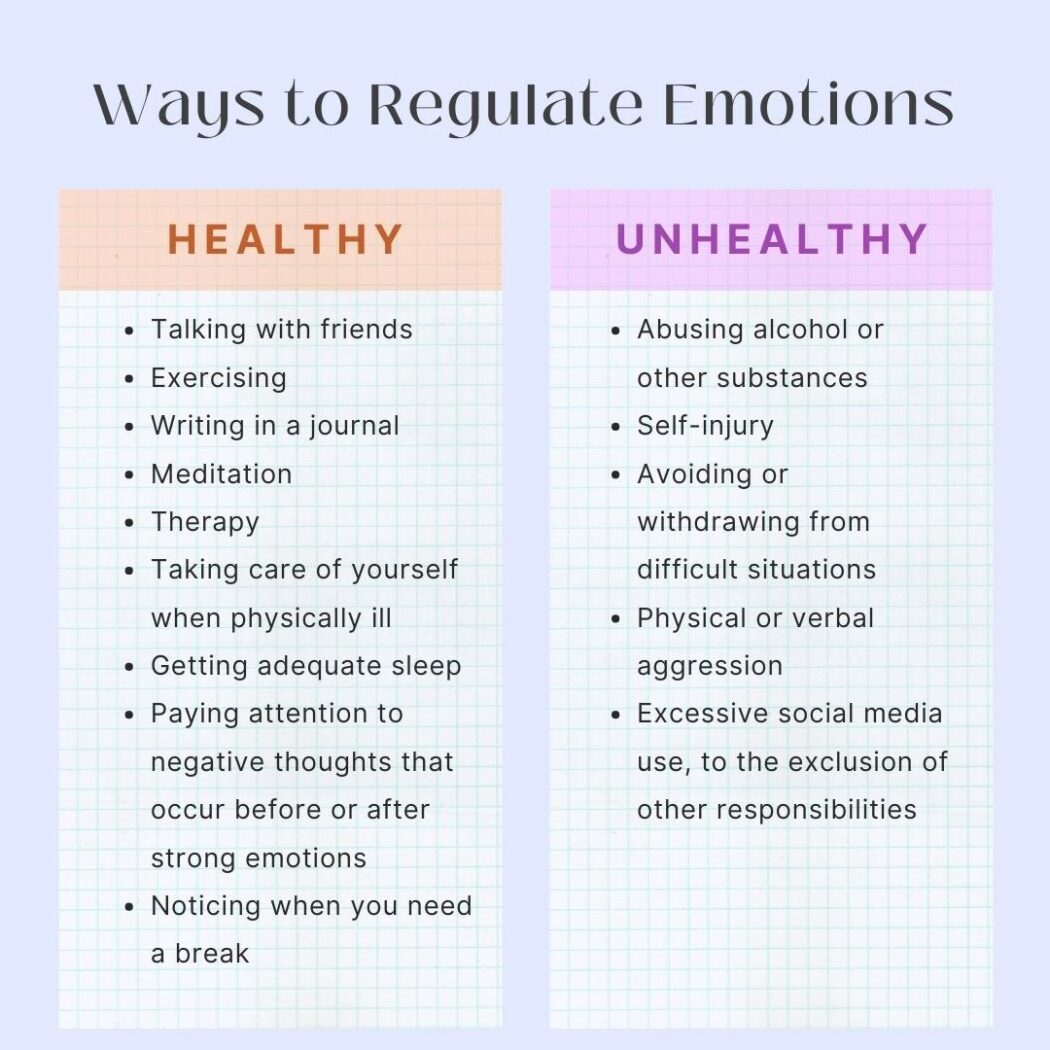
There are many ways to deal with hard emotions healthily; medium.com compiled several.
Therefore, if handling emotions in unhealthy manners is one of the main issues affecting this generation, a step to bettering one’s mental health would be to figure out ways to do so healthily.
Saint Paul’s history and English teacher Kim Gardner describes how important it is to tune into how your body works to improve your mental health. “It is so important for young people to learn how their brains work. Mindfulness, exercise, and good nutrition are essential to mental health.”
Far too often people of today, particularly younger people, will notice a problem with themselves but not have the determination to make a change. One of the best ways to positively change attitude, mental health, and overall health is to learn how the brain works and to focus on improving health through diet, exercise, and social interactions.
Accordingly, the opportunity cost of spending time on the phone must be considered: every second someone spends mindlessly scrolling through social media is a second that they could be exercising, enjoying the outdoors, or interacting face-to-face, all of which greatly contribute to one’s happiness. This is one thing that the older generations have right, although they did not have a choice in the matter.
“Kids feel alone. Disconnected. Being connected is an important part of mental health,” Gardner remarked.
Clearly, the subject of mental health facing teens today is complicated and arduous, but this does not point to a lack of initiative on teens’ behalf. Rather, it affirms a lack of understanding, care, and open-mindedness in society.
Fixing the teen mental health crisis is not a case-by-case matter; it necessitates a societal shift from stubborn intolerance to attentive acceptance.
Concern is not enough. Action is required.
Published By: shawncooney2024
Back to Wolf Pack Press